PhotobucketPhotobucketPhotobucketPhotobucketPhotobucketPhotobucketPhotobucket
Showing posts with label Italy. Show all posts

Wednesday, August 27, 2014

2007 Cirὀ ἉVita Rosso Classico Superiore

A tasting note that was lost in the mail - Wine tasted early July 2012. Posted for blogging posterity. Interested if people have tried this wine, or later vintages recently.

Purchased from one of the most impressive bars in a blossoming Sydney wine bar scene (121BC), this Calabrian wine is defined by its tannins: if you are not a fan of tannic wines, a trip to merlotville might be advisable. The Cir Vita Rosso Classico Superiore is made using the indigenous Calabrian Gaglioppo grape, and in the glass, the wine looks and smells a bit like a Pinot – light crimson with a sappy, cherry nose. On the palate it is light to medium bodied with dark and sour cherry fruit, some all spice and sappy, earthy flavours with nice savoury intensity at the finish. The tannins are prominent and lingering in a good way – you find yourself pondering the tannins long afterwards. The drying characteristic of the tannins demands and greatly compliments food – a good start would be some rustic Calabrian pasta dishes.

Rating: 90pts
RRP: $32
ABV: 14%
Supplier: 121BC Cantina http://www.121bc.com.au/

Monday, February 28, 2011

2006 Pio Cesare Barolo (Piemonte, Italy)


Sticking my nose into this wine instantly took me back to my visit to Barolo. It had a classic nose of roses and cherry, with some lovely earthiness and notes of polished wood. Unfortunately I don’t get to stick my nose into enough Barolo. While it’s reasonably priced when you’re in Italy (this wine would roughly be $50 when there), once it gets to Australia it pretty much doubles in price thanks to the costs in bringing it out here (understandable), but also because of the taxes on imported wines (protectionist and ultimately counterproductive). I decided to open, however, one of the 3 bottles I had bought for the Open That Bottle Night - http://www.openthatbottle.net/ -
an event that gives me the excuse to open an expensive bottle of wine without the requisite special occasion!

The wine smelled beautiful, as Barolo is wont to do, but then the palate was all class as well. In Barolo terms, it is medium-bodied and not overly tannic, and in that regard it is quite approachable now. However, to be drinking it now is to be drinking it years before its peak. It is a superbly balanced and structured wine with everything in its right place. It’s predominantly savoury, with drying tannins, but also has some lovely cherry fruit and that beautiful lick of liquorice that is Barolo to a tee. It’s all underpinned by a fine acidity. It’s a wine that feels like the complete package and just needs to be given a numbers of years in a cool cellar to express itself.

I was initially 4 stars with a “+” sign for the future on this wine, but as I had the last few mouthfuls on the second day of it being opened, it delivered that intensity and persistence that mark it out as something a bit special, so I decided to give it a nudge.
4.5 stars.

Rated:


RRP: $100
ABV: 14.5%


Red


Monday, March 1, 2010

Decade Old Wine – 2000 San Vincenti “Stignano”, 1999 Koppamurra Cabernet Merlot Cabernet Franc


These two wines were both gifts that I’d had in the cellar for a while. I’ve found it hard to find much information on either wine, so didn’t really know what to expect or whether they’d be past their best . . . happily they were both in fine fettle.
2000 San Vincenti “Stignano” – Super Tuscan - Merlot Sangiovese blend – Very enjoyable and surprisingly powerful. The colour was darker than I would have expected from a 10 year old red from Tuscany and it had a nose of dark fruits, earthiness and well integrated oak. It was on the palate, however, that it was most impressive. Round, plum flavours came across with drive, power, and some impressive tannins. Plenty of yum factor with this wine and it has at least another 5 years left, if not a lot longer.

1999 Koppamurra Cabernet Merlot Cabernet Franc – Wrattonbully – This wine received minimum filtration, and this was evident in the slightly murky, faded crimson colour. Some people might find this a bit unappealing, but a lot of “murky” wines are actually wines of character and taste (exactly because of the lack of filtration), which turned out to be the case with this wine. Reminded me of a Coonawarra Cabernet with a lovely smelling nose of blackcurrant, a hint of mint, and an appealing touch of musk (I've not had much Wrattonbully, and given that it is only 20kms from Coonawarra and also has terra rossa soils it was interesting to see the connection). Plum, blackcurrant, and some earthy flavours on the palate are supported by a nicely structured palate, that has reasonable length and some gentle tannins. Could be aged for a few more years but I would be drinking it now.


Red

Saturday, February 20, 2010

2008 Pio Cesare Il Nebbio - $35


Pio Cesare is a family winery that was founded in 1881 and has pretty much produced wine every vintage since that time with the exception of the World Wars. A great, traditional Barolo winery, though this wine is in many ways a very modern expression of Nebbiolo. It is an entry level Nebbiolo that’s meant to be consumed early. It has a very short maceration period so as to reduce the tannins in what is normally a very tannic variety. It doesn’t see any oak, and is released about 6 months after vintage having spent that time in stainless steel. This is all very different from the long maceration and time in oak you get with Barolo and Langhe Nebbiolo. I wrote in a previous post on Barolo, that good Nebbiolo has the nose of a good pinot noir and the body of tannic cabernet. With the way this wine has been made its falls more on the Pinot side of the ledger . . .

Tasted this wine over two nights. A light, clear crimson that hasn’t developed the orange tinge that is normally evident in the variety. A fragrant, varietal nose of strawberry and cherry, some earthiness and a hint of lavender. It has a touch of sweet fruit on the front of the palate, but is a largely a savoury wine, with sour fruit flavours, spice, earthiness and some drying, chewy tannins. Its medium bodied and has decent length. Really enjoyed this.

Red

Sunday, February 14, 2010

Guerrieri Rizzardi Prosecco – NV - $30


The bottle says “extra dry” on the label, and I’m pleased to say the wine lived up to its claim. This dryness is a characteristic I love in many Prosecco’s that I have tried.


Guerrieri Rizzardi is a winery near Bardolino in the Veneto wine region in Italy. The wine’s colour is a very light gold, and is possibly the lightest coloured Prosecco that I can remember seeing. Its nose is not particularly intense, but it has citrus aromas and a hint of yeast. It’s on the palate, however, that this wine has its real appeal. It’s dry, crisp, savoury and refreshing. It has reasonable length and a nice aftertaste. It’s the kind of sparkling wine that I want to drink most of the time. Yum!


Red

Friday, January 29, 2010

2008 Prunotto Dolcetto D’alba (Piedmont, Italy - $25)


I’ve had this wine twice now and it’s been a great exercise in how external factors can affect your taste and enjoyment of a wine. The first time I tried it, the wine was drunk out of not particularly good wine glasses and at room temperature. While it was perfectly serviceable it didn’t really grab me at the time.

You will often read that red wine should be drunk at room temperature, though this is often said more from a European point of view, and really means that red wine should be served between 16-18 degrees. As room temperature in January in Australia is regularly at 25 degrees, even at dinner time, you are not really doing red wine a lot of favours if you simply serve it at room temperature.
Tonight, on a pretty warm evening, I put the wine in the fridge for 20 minutes just to cool it down a bit from room temperature, and then drunk it out of one of my lovely Riedel glasses. These two factors seemed to make a significant difference in turning it from a so-so wine into an enjoyable wine.
The wine has a deep purple-violet colour, as is typical with dolcetto. A nice nose of dark fruits, liquorice, and a bit of vanilla oak. To drink, dolcetto is normally juicy, plump and round before ending with a dry finish, and this wine fits the bill in this regard. Its medium bodied, continues with the same dark fruit flavours, has a hint of spice, and has a dry finish of reasonable length. Enjoyable, easy drinking and complemented the pizza perfectly.

Red

Monday, January 18, 2010

Imported Whites: 2008 Domane Wachau Gruner Veltliner, 2008 A. Mano Fiano Greco, 2008 Dr Loosen Riesling


I’ve spent the past week lying on a beach in true Aussie summer holiday fashion, while also consuming plenty of summer quaffers. Three of these quaffers were imported white wines

2008 Domain Wachau Gruner VeltlinerAustria - $22 – I haven’t had many Gruner Veltliners, which is an Austrian variety that has plenty of similarities with Riesling. On the basis of this wine I’ll be looking to stock up on this variety. The wine had a lovely aromatic nose of apple and floral notes that had me confident the palate would be equally good . . . and it was. A juicy palate, with some nice fruit sweetness on the front palate, before finishing long and dry. Flavours of lemon, grapefruit, and pepper along with a nice sense of acidity and minerality. I’d assume it will age well over at least the next 5 years. Lovely drinking.

2008 A Mano Fiano GrecoItaly - $20 – Once again I haven’t had many Fianos, and don’t think I’ve ever had a Greco. Both are Italian grapes and this wine is from Puglia. A blend of 50% Fiano and 50% Greco. To enjoy this wine you’d have to enjoy a bit of sweetness in your wines. It’s in no way too sweet or cloying, but the overall impression is of fruit sweetness. It has a reasonably aromatic, intense nose of tropical fruit with hints of lychee and pears. On the palate it continues with the sweet, tropical fruit favours. The finish is of reasonable length and has a very interesting and enjoyable sweet and sour finish. If you are looking for a sweet summer quaffer that is a bit different then this is worth checking out.

2008 Dr Loosen RieslingGermany - $23 – Always on the look out for good Riesling, and I’d had the 2008 Dr Loosen Blue Slate Riesling a while back and really enjoyed it. The Blue Slate was a dry style, whereas this wine, their other entry level Riesling, is a sweeter wine. Once again It’s not cloying or too sweet, but compared to the average Aussie Riesling it is definitely on the sweet side. It has a nice fruity nose, and is tasty on the palate with flavours of apple and lemon. If you like your Riesling a bit sweet then this might be for you, but personally for the same money I would be buying Dr Loosen’s Blue Slate Riesling or one of the many fantastic Aussie Rieslings you can get for $15-$20.

Red

Saturday, December 26, 2009

Red’s Xmas Eve – Bellussi Prosecco, 2008 Grosset Watervale Riesling, 2006 Martinborough Vineyard Pinot Noir

Christmas eve was a wonderful family dinner, with a mixed plate of fresh oysters, prawns, and tuna and salmon sashimi for the entrée, and then a prawn gnocchi for the main. Would love to tell you more about the food but this is a wine blog. Stay on message they always say. Suffice to say the food was beautiful.

Now to the wine . . .

Bellussi Prosecco di Valdobbiadene – $25 - My wife is a big fan of Prosecco so we kicked off the evening with this . . .
On the nose it had that subtle bit of yeastiness which I like. On the palate it had good fruit, a hint of pear, with a bit of sweetness, but from mid to back palate was dry, and you’d definitely put it in the dry style of prosecco. Very tasty and drinkable, and at $25 a bottle would happily purchase more.

With the seafood platter we had a 2008 Grosset Watervale Riesling ($35). A somewhat developed colour for an ’08, this is a wine that is dominated by lemon and lime flavours. Nice and juicy on the palate. Quality wine that will undoubtedly age, though also highlights to me my personal preference for the Eden Valley Rieslings. This wine had none of the floral nose and minerality on the palate that I love in my riesling. Not a criticism just my preference. If you love your Clare Valley riesling you'll certainly enjoy this.


With the prawn gnocchi we had the 2006 Martinborough Vineyard Pinot Noir ($80). I’m not someone who has drunk a lot of pinot noir (not compared anyway to what I have put away in terms of cabernet and shiraz), but I’m certainly coming around to the variety and starting to drink more of it. This wine has done a mighty service to that cause.

I’d say it’s the best Pinot I’ve drunk this year. It combines power and hedonism, with complexity and elegance.

Firstly it’s a dark pinot that foretells of the power and hedonism of the wine. Secondly it has a wonderfully aromatic nose. While there are descriptors I could mention, none of them to me stand out or are obvious, but rather all blend together to produce a wine that you could just keep on smelling (for the record I got strawberries, game/meaty aromas, and spice).

On the palate it is all class. It is silky and smooth, and while there is some sweetness on the front palate, the flavours are predominantly savoury. In fact the front palate provides the yum factor, while the middle to back palate provides a complexity of flavour that you keep coming back to. It has great length, structure, and tannins, and I’m sure it could age at least another 5 years.

I could feel a bit guilty having drunk it when it still had some ageing left in it, but it was just such a beautiful wine that I see no reason to feel that way. It was a superb way to finish off the night.


Red

Sunday, November 29, 2009

The Beauty of Barolo - Part 3

Our third and last day in Barolo was to be a full day of tastings.

Our first visit was to Sandrone, one of the more famous Barolo wineries, having received high praise from wine critics over the years.

Barbara Sandrone met us at the winery and took us through one of the most complete tours of a winery I have had. She showed us the vineyard where their grapes comes from, Cannubi Boschis. She then took us through their entire wine making process, from where the grapes were brought in, through to the on-site bottling. It was an impressive, well thought out set-up, in which gravity was used to move the wine throughout virtually the entire process.

The 2005 Barolo itself was a classy wine, of great structure and length. One thing that was noticeable was some really nice French oak on the nose. The wine was matured in the smaller French barriques. The use of French oak is something that the younger, more modern Barolo wine makers typically use. This is in contrast for example to the traditional Bourgogno Francesco Barolo, where the big, slavonian oak barrels are used. I like both styles of wine, but if I had to state a preference it would be for the traditional, slavonian oak wines. French oak I guess is a somewhat familiar flavour/aroma, whereas Slavonian oak was unique to me. The fact the slavonian oak barrels are far bigger than the French oak barriques means that there is less of an oak influence on the wine as well.

At 90 Euros, this Barolo was beyond my budget, and I wasn’t sure that it was so much better than some of the 20-30 Euro Barolo we had tried, that it justified the price difference. In saying that it, it was a wine that was perfectly balanced and gave me the sense that it would age beautifully.

Our next stop was Sottimano, a producer of Barbaresco. Barbaresco is half an hour north of Barolo, and the regular refrain is that if Barolo is the King of Italian wines then Barbaresco is the Queen. Barbaresco follows a lot of the same guidelines as Barolo, but is aged for only 2 years, not 3 years like Barolo. It is generally considered less tannic and more approachable at a younger age than Barolo.

The thing that I took away from the tasting at Sottimano was a belief in the influence of terroir on wine. Not that I hadn’t accepted its influence previously, but Sottimano provides the clearest evidence of this influence that I had seen. Two of their Barbarescos are the Curra and Cotta. These are two major vineyards in the Barbaresco area that are pretty much next to one another. Andrea Sottimano produces his Cotta and Curra Barbarescos in exactly the same manner. The vineyard treatment is the same, the grapes are picked at the same time, and the winemaking process is exactly the same. And yet they are distinctly different wines. The Curra is a darker, more tannic Barbaresco, while the Cotta while also quite powerful has a freshness and minerality that the Curra doesn’t. Both are beautiful wines. The difference between the two wines is 500 metres. 500 metres and the slight differences that means in terms of soil, exposure to the sun etc. is the sole reason for the distinctive difference that these two wines display.

After lunch we drove over to Serralunga D’alba. This pretty hilltop town northeast of the town of Barolo, is renowned for having the most powerful, tannic Barolo. Given how tannic a normal young Barolo is, I was keen to see what Serralunga had to offer.

The first Serralunga winery we went to was Palladino. We were hosted by an older Italian guy (with his niece translating), who had visited Australia a few years previously. He had loved his time in Oz, and when he heard we were from Australia we instantly became best of friends! His Barolos were very tannic, though still enjoyable to drink in my opinion. The best thing about the visit there was that we got to taste barrel samples from 07 and 08 (06 was already in bottle). This was the first time I had done any barrel samples, and it was interesting being able to get a snapshot of upcoming vintages. Interestingly Palladino are experimenting with both French and Slavonian oak with their upcoming wines.

Our final winery for the day was Germano Ettore. This winery is another great place to see the influence of terroir. Their two top Barolos are the Prapo and Ceretta, which are two vineyards once again only a few hundred meters apart. Compared to other Barolos, both are very powerful and tannic, but when comparing the two side by side, it is obvious that the Prapo is the prettier more aromatic wine. The Ceretta was literally the most tannic wine I had the whole time I was in Barolo! Mouth covering tannins had you literally chewing for a minute after you’d swallowed the wine. In saying that, it still had a beautiful nose, and good structure and length. I bought a bottle and its going to be in my cellar for at least 10 years!

If you are wondering why we only managed 4 wineries in a full day of tasting, that started at 10am and finished at 5pm, it was because it was virtually impossible to complete a winery visit in under an hour. Our hosts were all so incredibly friendly and generous that I reckon each visit lasted at least an hour and a half. They pretty much all showed us their vineyards, took us through the winery, and when it came to the tastings would take us through every bottle of wine and be more than generous with the pours!

So that was it for our 3 days in Barolo. I want to go back. While I feel I got a great insight into Barolo, the place and the wine, in another sense I feel like I only scratched the surface. As most of the wineries are small, family owned businesses, there are hundreds of Barolo producers, while I only tried wines from 10-15 wineries. I didn’t even try a wine from Castiglione Falletto, one of the main Barolo sub regions. Barolo is both a place and a wine, and I love both!

Another thing I haven’t even mentioned are the Barberas and Dolcettos of the region, which I loved as well . . . as well as the cheese and the chocolate! This is something I will post on as well in future.

My main thoughts now are, when can I get back there, and when will I be able to regularly afford to purchase Barolo in Australia which is normally $100 per bottle and more!


Red
Thursday, November 12, 2009

The Beauty of Barolo - Part 2

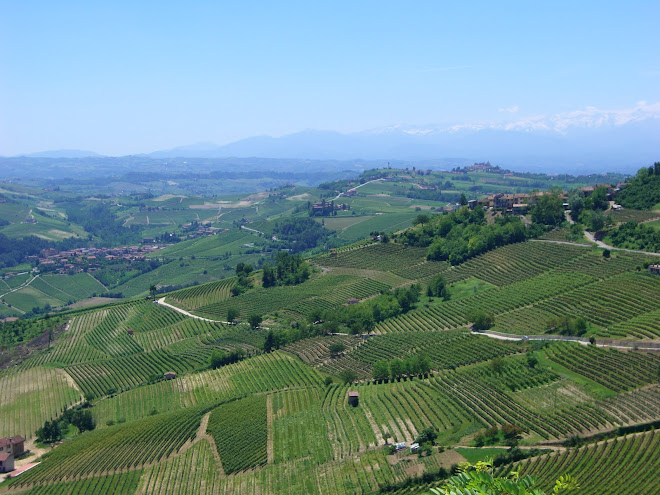
The morning of our 2nd day in Barolo, we drove around to a number of other hilltop towns in the area. It was great fun driving along the winding roads, up towards each little town. It was incredibly picturesque, and each town would have a panoramic view across the rolling hills of Piedmont across towards the Alps.

Of course, everywhere you drove there were vineyards, often located quite dramatically on steep hillsides. This just whetted my appetite for the tastings in the afternoon.

After lunch we went to a number of wineries, including Damilano and Francesco Rinaldi & Figli. However, the one that stood out was Borgogno Francesco.

We drove into the winery on a whim, seeing it as we drove along. We weren't really sure whether they did tastings so we approached the house a bit sheepishly. We were greeted by an elderly man with a big smile and firm handshake. In my non existant Italian, and his non existant English, we worked out that we wanted to try their wines and were invited into their house.

We were greeted by a pretty chaotic family scene where a young girl was chucking a tantrum. Ushered into the kitchen we met a woman who spoke really good english. She was the daughter of the elderly man, who she explained was in fact Francesco Borgogno, the owner and winemaker. We soon struck up a great conversation with plenty of translation going on between myself on Francesco. The winery and the vineyard (Brunate which sits between Barolo and La Morra) was initially run by Francesco's father, and now Francesco's son was doing most of the winemaking. Francesco pronounced that his was the best Barolo. Without context that would sound like a pretty arrogant statement, but the way in which he said it, it didn't seem arrogant at all, and you could see it was borne out of pride for what his family had produced over many years.

The Barolo we had was the 2005. The first thing I noticed was the price. 16 Euro. This was the cheapest Barolo we had seen to that point, with most being around the 25 Euro mark, and obviously a number being a lot more than that.

The nose was beautifully fragrant, with roses and licquorice noticeable. The wine is from the famous Brunate vineyard, which typically produces very aromatic Barolo and this was definitely the case. It is also aged in large salvonian oak barrels, so there is not much noticeable in the way of oak on the nose.

The palate was full bodied, rich, with good length, and once again had some beautiful tannins.

This was one of the most enjoyable Barolo's we had tried thus far, and it was far and away the cheapest. We nabbed a couple of bottles.

All through the tasting, the family were incredibly friendly, with all sorts of cheese and meats coming out and very generous tastings (we had to almost physically stop Francesco from pouring us another glass!). The young girl's tantrum continued throughout much of the tasting, but was all part of the big Italian family experience. They were incredibly generous, and almost seemed honoured that a couple had travelled all the way from Australia and were tasting their wines, which to me was ridiculous seeing I felt lucky to be drinking such quality wine for free.

A memorable Barolo to match a memorable experience!


Red

Thursday, November 5, 2009

The Beauty of Barolo - Part 1


I am at home this morning, as a leak in our bathroom has caused a veritable flood in our bedroom, and having done what I can to salvage the situation I am now waiting on the plumber. The plumber said he'd arrive between 10 and 11, which frankly could mean he will saunter up a 3pm. As such, I believe its a good time to write about the trip my wife and I made to Barolo, in Piemonte, Italy in May this year.

We had an amazing 3 weeks in Europe which saw us in London, Paris, Turin, and of course Barolo. While all the other places were suitably wonderful, with great weather to match, the 3 days we stayed in Barolo were for me the highlight.

Barolo is the name of the town, which lends its name to arguably the premier red wine in Italy. Barolo is an hour and a half south of Turin, in the region of Piemonte. Its is an undulating area, dotted with lovely hilltop towns, full of vineyards on wonderfully steep slopes, with the Alps providing an amazing backdrop to it all. It is incredibly pretty, and is often described as "Tuscany without tourists". I agree.

I would go there even if there wasn't any wine of interest to me there. That there was just made this trip even more memorable.

Barolo is not a grape, but rather a designation of quality if you like, or Denominazione di origine controllata e garantita (DOCG). To call your wine a Barolo it has to

- be 100% Nebbiolo
- come from a specified area which includes the area around the town of Barolo, as well as nearby hilltop towns like La Morra, Novello, Castiglione Falletto, Serralunga D'alba, Verduno, Cherasco, Verduno, and Grinzane Cavour. Indeed around some of these towns it is only certain designated areas that can produce Barolo
- be aged for 3 years - 2 in the barrel and one in the bottle
- minimum alcohol of 13%
- maximum production of 8 tonnes per hectare


I'd read lots of great things about Barolo, that it was the "King of wines, and the wine of Kings" etc., but I'd never even tried a nebbiolo (a very rare varietal in Australia), let alone a Barolo. The other thing I'd consistently read was that Barolo was very tannic and often verged on the undrinkable in its youth, but then would age beautifully over 10-20 years. So while I was excited, I also was slightly concerned that in tasting young Barolo we wouldn't be doing the wine any justice.

Our first day in Barolo, we arrived around lunchtime. After having lunch and settling into our bed and breakfast, we set off in the mid-afternoon to wander around the town of Barolo. After wandering along some lovely little cobbled streets, the first place we stumbled upon was the Enoteca Regionale del Barolo, which essentially is the wine tourist centre for Barolo. This was a great place to start, as the people there were able to give us an excellent overview of Barolo wine in general. For a few Euro we were also able to taste a reasonable selection of wines. My first Barolo tasting.

I wouldn't say I was 100% hooked from the first tasting I did, but I was pretty close. The first thing you notice is the colour. Barolo, even young Barolo is always light red colour with an orange tinge. Coming from Australia where many of our wine are normally very dark red, and even dark purple and inky at times this was definitely something different. The next thing is the smell of the wine. In some way this is the highlight of Barolo. The first couple of Barolo's I tried, and pretty much every subsequent Barolo, smelt beautiful. Cherries, strawberries, and roses, were the smells I consistently got with the first couple of Barolo's I tried, and then depending on the wine there were other smells like licquorice, spice, plum, and vanilla. These were the most fragrant and interesting smelling wines I had ever stuck my nose into. In some ways similar to the nose you might get on Pinot Noir, but better (not that I've ever had a truly top Burgundy).

On the palette you'd typically get the same fruit you got on the nose, but what was really noticeable was the length, structure and . . . bloody hell . . . the tannins! If you swirled it around in your mouth a few times your mouth would just be covered in these amazing, long lasting, chewy tannins. You'd stand there just chewing the tannins long after the wine had disappeared down your gullet.

I could see what people had meant when they talked about how tannic young Barolo was. However, I disagreed with them on one thing. I loved it! Saying Barolo verges on the undrinkable in its youth is ridiculous. These people who spout this line need to take a drink of Harden up!

Admittedly, the tannins are so strong that you wouldn't want more than a couple of glasses at a time before your palette was destroyed, and also I wouldn't bother pairing a young Barolo with any food other than bread, as the tannins would overpower any flavours you had in the food. But as for simply having a glass of young Barolo on its own, I'm all for it. Obviously Barolo gets better with 10-15 years in the bottle, with the tannins softening and the secondary characteristics coming out, making it a more complex, savoury style of wine. However, please don't ever believe the line that young Barolo is somehow undrinkable in its youth.

The rest of the afternoon, we wandered along the main street in Barolo where there are a number of little wine shops where you can do tastings of various winemakers from around the immediate area. We got to talk to a number of winemakers, and gradually started to get a sense of different vintages (though we were largely drinking 2005), and the different subregions and vineyards of Barolo. Most importantly we got to try numerous Barolos. Every wine was different, though they basicaly all follow the same path of having a beautifully fragrant nose, while having great structure and incredible tannins on the palette. The best way I can describe it to people who have never had a Barolo, is to imagine a wine with the nose of a beautiful Pinot Noir, with the palette of a young, tannic Cabernet. To me it's almost perfection.

If i wasn't quite hooked after the first tasting, then I was 100% hooked on Barolo by the end of the afternoon, with the alcohol, and the romanticism of being in a beautiful hilltop town in Italy on sunset, undoubtedly playing their part. I was now looking forward to the next day, when we would get in the car and drive out to a number of the wineries where we had made appointments. I couldn't wait!!!

Red

Friday, October 30, 2009

2003 Andrea Oberto Barbera D'Alba Giada

My wife and I spent a few days in the Barolo area in Piedmont, Italy earlier this year. We both fell in love with the place and the wine of this region. I will be writing something on this trip soon. Ever since coming back I've had a thirst for not only Barolos and Barberescos, but also the "lesser" wines varieties of this wine region such as Barbera and Dolcetto.

The 2003 Andrea Oberto Barbera D'Alba Giada is an enjoyable and interesting wine. I was really looking foward to drinking this wine, and the light, yet bright purple colour of the wine looked promising.

The first sniff of the wine however was a shock. Alcohol. The most noticeable thing on the nose was almost a searing heat on the nose from the alcohol. 2003 was a hot vintage in Piedmont and I thought this might have been a wine that was going to be too alcoholic. I'd seen that the wine was 14.5% alcohol, not exactly low, but certainly not something that would normally disturb me. However the nose would have seemed to indicate an alcohol level a lot higher than 14.5%.

I left the wine for a while to breathe a bit, and when I came back the heat on the nose had died down a bit and I could actually smell something else! Cherry, plum, spice, and a bit of vanilla oak. I guess somewhat typical of a barbera, though also reminded me a bit of a good merlot nose.

On the palette, the initial main flavour was sour cherry, but then as the wine opened up over time, I noticed more the savoury, earthy flavour on the finish. Its good through the mid-palette but then is a tad short on the finish. Interestingly, there is a tiny bit of heat on the palette, but its not especially noticeable, and is certainly less than you would have expected based on the nose.

If ever there was a case for giving wine a chance to breathe this was it. It started off with a very alcoholic nose that made me question whether I'd enjoy it at all. After a couple of hours it evolved into a wine of real personality, with a nice balance between the fruity and the savoury. Very enjoyable!

Red
 
Blog Design by: Designer Blogs