





PhotobucketPhotobucketPhotobucketPhotobucketPhotobucketPhotobucketPhotobucket
Showing posts with label Biodynamic Wine. Show all posts

Tuesday, November 5, 2013

Vision realised: Avani Winery - Mornington Peninsula


Davendra and Shashi Singh are like many small-scale winemakers we have met on our travels. They have a passion for their craft and work hard to realise their vision. In their case, enough passion and daring to strike out beyond their successful restaurant businesses and take the considerable step of buying their own winery. This move occurred in 1998 when they purchased Wildcroft Estate, located south of Red Hill in the Mornington Peninsula. From 2000, Philip Jones of the Bass Phillip winery made Avani’s wines, with Shashi’s role in the winemaking process increasing from 2004 onwards.

Some reasonably young Syrah vines grafted onto older vines.
Halfway down the vineyard at the transition point from red to grey soil
As we walked with Shashi and Davendra through their winery and vineyard in early October, it was difficult not to be impressed by their enthusiasm, though also their boldness: Avani are possibly unique in the Mornington Peninsula (and if not, only one of a handful of wineries) to exclusively produce Syrah (quite rightly named given the style they aim for).
When asked about the exclusive production of Syrah, Shashi explained that following several vintages where Syrah stood out, they decided to take the advice of Phillip Jones, as well as trusting their own palates, replanting a conventional suite of Mornington grape varieties with Syrah. Shashi explained that they had initially aimed to make Pinot Noir using Bass Phillip's Pinot Noir as a (very high) benchmark. When the first few vintages turned out to be successful, though not exceptional wines (in their view), they decided to focus on the grape most assisted by the terroir. Acknowledging the time it takes, and the financial risks involved, it is still refreshing to see winemakers taking a punt to make wine based on the varieties that are empirically superior when grown on a given site, rather than persisting with a variety unsuited to the region and/or terroir.

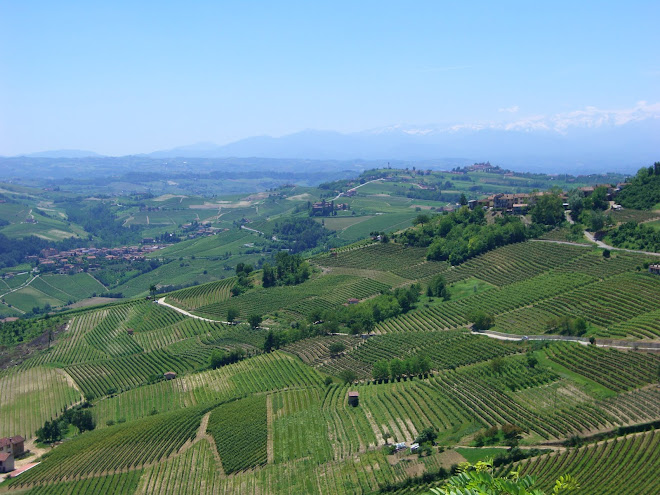
Walking further down the sloping north facing Avani vineyard, the soil transitioned from deep red volcanic clay near the winery, to a slatey, alluvial grey lower down. Davendra and Shashi shared with us the journey they have taken developing the winery and vineyard over the last 15 years. This included the ongoing process of rehabilitating the vineyard, transforming it gradually from a conventional winemaking operation to an organic and biodynamic one, dramatically reducing the cropping levels while increasing the vine density.

Shashi and Davendra were rightly proud of the positive impact organic and biodynamic farming practices were having on the health of the soil (and as we would find out later that morning, on the wines themselves). The soil was healthy: soft underfoot with lush grass and plant life nearby.

The Avani vineyard, 3/4 down, looking toward the winery
Shashi and Davendra are now 100% in control of the whole winemaking process, with the 2012 vintage being the first made exclusively on site. A vertical tasting of the 2009, 2011 and an in-barrel taste of the 2012 confirmed that the wines being produced at Avani are on the improve as the younger vines on the vineyard mature, and as the increasingly confident winemaking is honed and perfected.

As we both left the winery on the sunny spring morning, it was clear that the story of Avani was one that should appeal to the hearts, minds and palates of drinkers keen to try small output, hand-made, honest yet exciting wines.

Tuesday, September 11, 2012

2011 Lark Hill Pinot Noir (Canberra)


What a difference a day can make. On opening this was a challenging Pinot Noir, that only a real Pinotphile might appreciate, being all sap, spice, and undergrowth. On day 2 however, some lovely strawberry/cherry fruit and sweet oak had come through to balance those savoury, spicy characters. Day 3 continued the trend, and it ended up being a joy to drink. It’s a nicely balanced Pinot that's delivers much drinking pleasure. Gives this another year or so and then enjoy.


Rated:


RRP: $30
ABV: 13.5%
Drink: 2013-2016
Closure: Screwcap


Red

Thursday, June 21, 2012

WINE WARS EPISODE 3 - NATURAL WINE


In the latest installment of the inter-gallactic battle for the future of wine, Obi-Wan, Luke and the Droids have set off for Mos Eisley, seeking a smuggler of Natural Wine who can transport them to Alderan. The fate of the Biodynamic Wine Alliance depends on their mission.

Click HERE to View Wine Wars Episode 3

Sunday, June 3, 2012

Yelland and Papps Devote Greenock Shiraz 2010

The 2010 Yelland and Papps Devote Greenock Shiraz was made using grapes from a single site in the northern Greenock sub-region of the Barossa Valley. Inky purple in colour and with a fruitcake spice and black fruit nose, the wine has impressive, silky blackberry, spicy dark plumb fruit flavours flowing through from the front to back palate, some milk chocolate and chinotto flavours on the finish and pliant, ripe tannins.

The fruit flavours are powerful and sweet, though balanced with the sensitive (and relatively understated) use of new and old American and French oak. This is not a subtle wine, more seductive and overt than demure and suggestive. However, the result is not confected or overwhelming, just enjoyable and moreish.

After three days on the tasting bench, the wine didn’t budge much, other than for the tannins to assert themselves some more and the sultry fruit cake spice.
This is another example of Yelland and Papp’s enjoyable, fruity and flavoursome Devote range, and from a very good vintage – it has enough restraint, expensive oak treatment and structure to suggest it will age nicely in the cellar, yet will please a majority of wine drinkers right now – a ‘win-win’ approach.

Rating: 93pts
RRP: $32
ABV: 14.5%
Website:
Source: Sample

Tuesday, February 21, 2012

Wine Wars - Episode 1: A Vinous Hope

A short time in the future, in a galaxy not that far away, two diametrically opposed wine making factions face off in a battle that will decide the future of wine consumption in the galaxy:

LINK:  Wine Wars - Episode 1: A Vinous Hope

Sunday, October 23, 2011

2009 Sons of Eden Kennedy Grenache Shiraz Mourvedre

I have to be upfront and admit that I have a vested interest in this wine – I tasted the old vine Grenache and Mourvedre that went into the Kennedy GSM when it was maturing in the barrel in Spring 2009, and from that point on was looking forward to trying the finished product.  That trip to the Barossa Valley involved us visiting several wineries, including Sons of Eden. The warm hospitality from people like SoE viticulturist Simon Cowham helped motivate me to develop this blog (co-opting ‘Red’ in the process). However, fond memories do not a good wine make, so on to the 2009 Kennedy GSM:

Based on the wines tasted to this point, 2009 was a surprisingly good, if low yielding, vintage for Grenache in the Barossa Valley. To back this view up, the 50+yr old vine Grenache and Mataro are the winners in this wine. They add a nice mix of juicy, spicy black cherry, raspberry and blackcurrant flavours, with the 40% of Shiraz providing some chocolate, black fruit support without dominating. There is a nice, earthy smooth tannic kick at the finish, combined with more lingering, clove, allspice and red fruit flavours.

There is a nice, voluptuous harmony to this wine – sweet fruited without being stewed or overdone. The Kennedy is listed at 14.5% abv, and could well be higher, but it is not overly noticeable.

The Kennedy is a moreish and approachable wine that will please many. A wine to be enjoyed, not contemplated. It is drinking nicely now and will do so for a few more years. As with other juicy GSMs, this wine can be served at below room temperature to maximise the fresh Grenache fruit in the wine, or served at room temperature in the middle of winter for some cold weather comfort!


Rating: 90pts
RRP: $22
ABV: 14.5%
Website http://www.sonsofeden.com/

Tuesday, September 6, 2011

Organic & Biodynamic wine tasting

There is an increasing trend in the world of wine towards organic and/or biodynamic vineyard management. By and large I am happy to drink organic, biodynamic, or conventional wines and just assess what I see in the glass. Many people engaged in the debate, however, either dismiss many of the ideas, particularly around biodynamics, or conversely are very passionate in support of these two vineyard approaches, and are generally of the belief that organic/biodynamic wines are inherently superior to more conventionally made wines. A tasting at the Oak Barrel in Sydney, where Gilles Lapalus from Sutton Grange in Bendigo and Eric Semmler from 919 Wines in the Riverland, took us through a number of organic/biodynamic wines, was a great opportunity to explore and discuss this trend towards organic/biodynamic vineyard management.

To first define what each approach is (at least as far as I understand it). Organic wines are simply wines made from grapes where no chemicals, herbicides, pesticides etc. have been used in the vineyard. This organic approach is meant to result in a healthier vineyard, better grapes, and ultimately better wine. To me anyway, it makes perfect sense, and I’ve seen it in other agricultural products like chickens, tomatoes etc. They just generally taste a bit better than their conventional counterparts. The other consideration with organics is the longer term health of a vineyard. While maybe the occasional use of some chemical agent in a vineyard mightn’t ultimately be that detrimental, their consistent use year after year, over decades, must surely start to affect the health of a vineyard and therefore the quality of grapes it can turn out, at least in comparison to an organic approach. Ultimately, I don’t actually see much that is controversial in organic wine, other than it could present vineyard management challenges in a tough vintage when disease is more likely.

Biodynamics is altogether more controversial and much harder to define. To simplify it is organics with a cosmic and spiritual bent. Its starting point are the writings of Rudolph Steiner, and generally result in a more holistic approach to vineyard management. A lot of the more obvious aspects of biodynamics focus on composting and preparations that tie in to some extent with organics, however tend to go a step further into some somewhat obscure practices. The most famous of which is Preparation 500, which involves burying a cow’s horn full of manure in the vineyard in winter, and then digging it up in spring to release a whole bunch of apparently helpful microbes into the vineyard.

After that biodynamics moves into some of its more controversial aspects such as working in sync with moon cycles. Semmler from 919 wines, claims that the key determinant to his vines ripening are the moon cycles. While heat and the season obviously play a major role, Semmler says that the moon moving into a waxing cycle will bring on the ripening he requires to pick, rather than a heat wave or any other factor.

It’s probably quite easy to be cynical about these things (and to be honest I’m still a bit of a sceptic). The thing, however, that I will say in defence of those that practice biodynamics (at least those that I have met), is that they are far from the imagined airy fairy hippies dancing naked around their vineyards. Often they are pragmatic, experienced vignerons who have worked in both conventional and organic/biodynamic vineyards over many years. Experience has shown them what they believe to be a better approach.

So to some of the highlights of the evening -

2010 “919” Vermentino (Riverland)
Vermentino loves the heat and would seem a good grape to be growing in the Riverland. This is a white wine that offers a point of difference. Green apples, citrus, spice and a lovely creaminess. It has a nice sense of texture and grip. Would be fantastic with white meats.

2009 Ngeringa Pinot Noir (Adelaide Hills)
This is an understated Pinot Noir that really sneaks up on you. Light, fresh, and savoury with some lovely sour cherry. It never loses focus, and has a very long finish. Lovely Pinot.

2009 “919” Tempranillo (Riverland)
Once again this wine offers a point of difference. It has a nose of dark cherry and liquorice all sorts. It’s a rich and powerful wine, but retains a sense of balance with flavours of cherry, earthiness and some lovely tannin. Nice

2009 Dard & Ribo Hermitage Rouge (Rhone Valley)
This is such a fresh and sexy wine. Its characterised by beautiful juicy fruit and is dangerously easy to drink. Lovely berry fruits and spice. Mellifluous. Would buy and drink a lot of this if it wasn’t $100 a bottle.

2006 Sutton Grange Syrah (Bendigo)
This wine is a tannic beast, and I love it all the more for it. It has a beautifully perfumed nose with a nice touch of funk. The palate is one of plush dark fruit, spice, and those amazing tannins. If Bendigo Shiraz can ever look like a Barolo then this wine is it.


These wines were undoubtedly wines of character, interest, and terroir. I really enjoyed tasting through such a line up. Did they, however, strike me as inherently better or more enjoyable than a line up of perhaps more conventionally made wines? Not necessarily. The trend towards organics/biodynamics I view as a positive one, but at the same time as just one element in amongst numerous others vineyard and winemaking inputs that go into producing the wonderful end product.


Red
 
Blog Design by: Designer Blogs