PhotobucketPhotobucketPhotobucketPhotobucketPhotobucketPhotobucketPhotobucket
Showing posts with label Beechworth Chardonnay. Show all posts

Thursday, March 27, 2014

2012 Sorrenberg Chardonnay (Beechworth)


This is one of my favourite Chardonnays but given the quality of the 2012 vintage this perhaps didn’t quite meet my lofty expectations for this label.  Ironic in a way that I prefer the Chardonnay that Barry and Jan Morey produced from the much maligned 2011 vintage. That being said the 2012 remains a beautiful wine and will improve over the next 5 years.
 
It took a couple of days to come together and really open up, but once it did it presented a lovely nose with notes of peach to the fore. It follows on from this with beautiful palate weight and everything nicely proportioned.  High acids and spicy oak integrate with air. Peach and an appealing milkiness are underpinned by a tell-tale minerally, lime streak that I find in all Sorrenberg Chardonnay.  Good persistence of finish. Time should be kind.  Cork as ever the only real negative I can find with these wines.
 
 
Rated: 4 Stars +
RRP: $48
Drink: 2015-2020
Closure: Cork
 
 
Red


Wednesday, April 24, 2013

2011 Sorrenberg Chardonnay (Beechworth)


Sorrenberg produce near enough my favourite Australian Chardonnay. I was particularly interested, however, to see what the 2011 looked like, given that it was a very cold and wet vintage in Beechworth. Langton’s have described it as an “awful vintage” in Beechworth, while two of the leading producers, Castagna and Savaterre, have produced little if any wine from 2011.

Of course, one of my learnings over the years is that from so-called awful vintages come some stunning wines occasionally. While most wineries in a region may struggle in a given vintage, there are often a couple of wineries that have not only been very diligent in the vineyard during a tough season, but have also had a bit of luck in terms of avoiding the worst of the conditions that their neighbours down the road experienced. I’d suggest this has what happened with Sorrenberg as they have produced yet another superb Chardonnay.

This is not to say the vintage hasn’t left its mark, for in relative terms it has less fruit volume and more prominent acidity than previous years, but it’s still first and foremost a Sorrenberg Chardonnay. Winemaker Barry Morey always puts his Chardonnay through 100% malolactic fermentation, a decent percentage of new oak, as well as some less stirring. The key thing with this type of treatment, however, is that the fruit from Sorrenberg is always up to the task. The 2011 has some lovely creamy cashew notes, along with some stone fruit flavours, but this generosity and creaminess is offset by the steely lime juice streak that runs its long length, and a quartz-like minerality. Over the course of 3 days it came together beautifully, with the fruit fleshing out and integrating with the acidity. It’s another beautiful Chardonnay from Sorrenberg, but definitely one that you need to leave in the cellar for the next couple of years. Of course there's the rub, for Sorrenberg is one of the few Australian Chardonnay producers still using cork. Cellaring their wine means running the Chardonnay cork lottery, something I’m typically loathe to do, but I make an occasional exception, and Sorrenberg is one of them.

Rated:


RRP: $50
ABV: 13.0%
Drink: 2015-2021+
Closure: Cork
Website: www.sorrenberg.com    


Red      

Saturday, September 10, 2011

2009 Sorrenberg Chardonnay (Beechworth)

I love Beechworth Chardonnay and on a value for money basis, Sorrenberg’s is arguably the best of them. As with most Beechworth Chardonnay it undergoes 100% malolactic fermentation, which generally gives the wine a generosity and creaminess that very much agrees with me.

It starts with an expressive, rich nose of peach and spicy oak. Then to drink it is bang on. It has a wonderful balance between fruit and savoury flavours, and then creaminess and minerality in terms of texture. The thing that really marks this wine out though is this beautiful streak of lime juice that runs its long length. It’s a point of difference and gives the wine that bit of an X factor. Give it a good decant and its drinking beautifully now, but ideally leave it in the cellar for another few years yet. Vying with the 05 Tarrawarra Reserve Chardonnay as my Chardonnay of the year thus far. Wonderful wine.

Rated:


RRP: $49
ABV: 14%
Website: http://www.sorrenberg.com/


Red

Thursday, July 21, 2011

Savaterre (Beechworth)


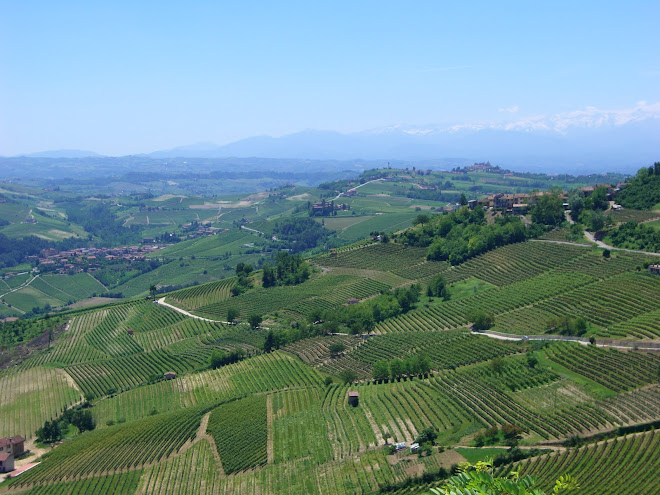
The drive up to Savaterre is the kind you picture when imagining a special vineyard (maybe you don’t imagine special vineyards or driving up to them, but as a wine tragic it’s a regular day dream of mine). Off the main road you take a left onto a steep dirt track that heads up for a 100 metres or so to the top of a hill, from which you get a glimpse of a pretty special panorama. You then continue along an undulating road for a few more hundred metres, until arriving at the winery and vineyard, where you are presented with a commanding view of the hilly surrounds, including site of the snow-capped Australian Alps in the distance. It almost feels like a Piemonte vista (in a very Australian way). Rather than Nebbiolo, however, it is Pinot Noir and Chardonnay that do the talking here.

Keppel Smith, owner and winemaker, was actually a policeman in the suburb I grew up in as a kid in Sydney. I was a pretty well behaved kid, however, and Lane Cove is a pretty safe and uneventful suburb, so our paths had not crossed until my visit to Savaterre.

In leaving Sydney and pursuing his wine dream, Smith engaged in a search across Australian wine regions for the perfect site to grow Pinot and Chardonnay. In overlaying a soil map with a topographic map, he found his mark in Beechworth. A cool, elevated, south facing site, sitting on buckshot gravel. The land itself had also been been sought out by other winemakers, however, the farmer there had not been willing to leave. Smith, however, managed to convince the farmer to sell his site by letting him keep a corner of the land on which he could continue to run some animals. And so the land was acquired and the Savaterre vineyard planted in 1996, with the first wines being produced from the 2000 vintage.

Since that time both the Chardonnay and Pinot Noir have built up formidable reputations, with the Chardonnay having recently been added to the Langton’s classification. While there I tried the 2008 vintage of both wines.

The 08 Chardonnay is a good’un. It’s powerful, yet refined. Rich yet textural. It has a lovely nuttiness and excellent length. In the current debate about “natural” wine and levels of winemaker intervention, Smith’s approach is very much one of minimal intervention (without wanting to wear the “natural” tag). A part of that approach is allowing his Chardonnay to run its natural course through 100% malolactic fermentation. He posits that anything less than 100% Malo is interventionist and a move away from a natural expression of site and grape. It’s a view I’m inclined to agree with.

The 08 Pinot is equally impressive. I tried it while at Savaterre and then also had it over a couple of nights once home. It’s made with 100% whole bunch, and results in a beautifully aromatic Pinot Noir. It smells of cherry, five spice, a hint of sweet oak, and some lovely dried herbs. It’s savoury and structured on the palate, with a lovely sense of texture. Without food it might almost appear too savoury and a touch stalky, but with some duck breast it just drinks beautifully. It’s a Pinot that demands good food. There’s some good drive and intensity through the mid-palate, before delivering a long finish. Fine tannins and acidity are all nicely integrated. It’s probably 3-5 years from drinking at its peak, and cork permitting, should age for a number of years after that.

A beautiful site, a winemaker committed to expressing that site, and two very impressive wines. Great stuff.

Website: http://www.savaterre.com/


Red
 
Blog Design by: Designer Blogs